
When the landscape becomes alive through activities, then the livescape appears to reveal the barriers the changed locality faces in having a sense of ownership. In this research, the livescape is a way to discover the connections and clashes that happen in a locality, and a way to take part in it.
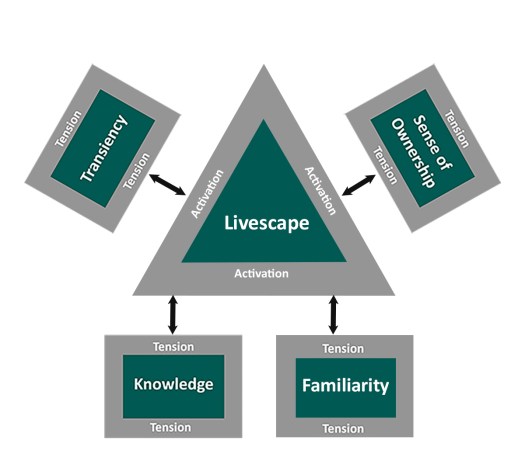
Figure: The Livescape as a model of engagement.
The Event
Events are livescapes and participating in them with a boat acts as a catalyst that breaks down interactions in the public space.
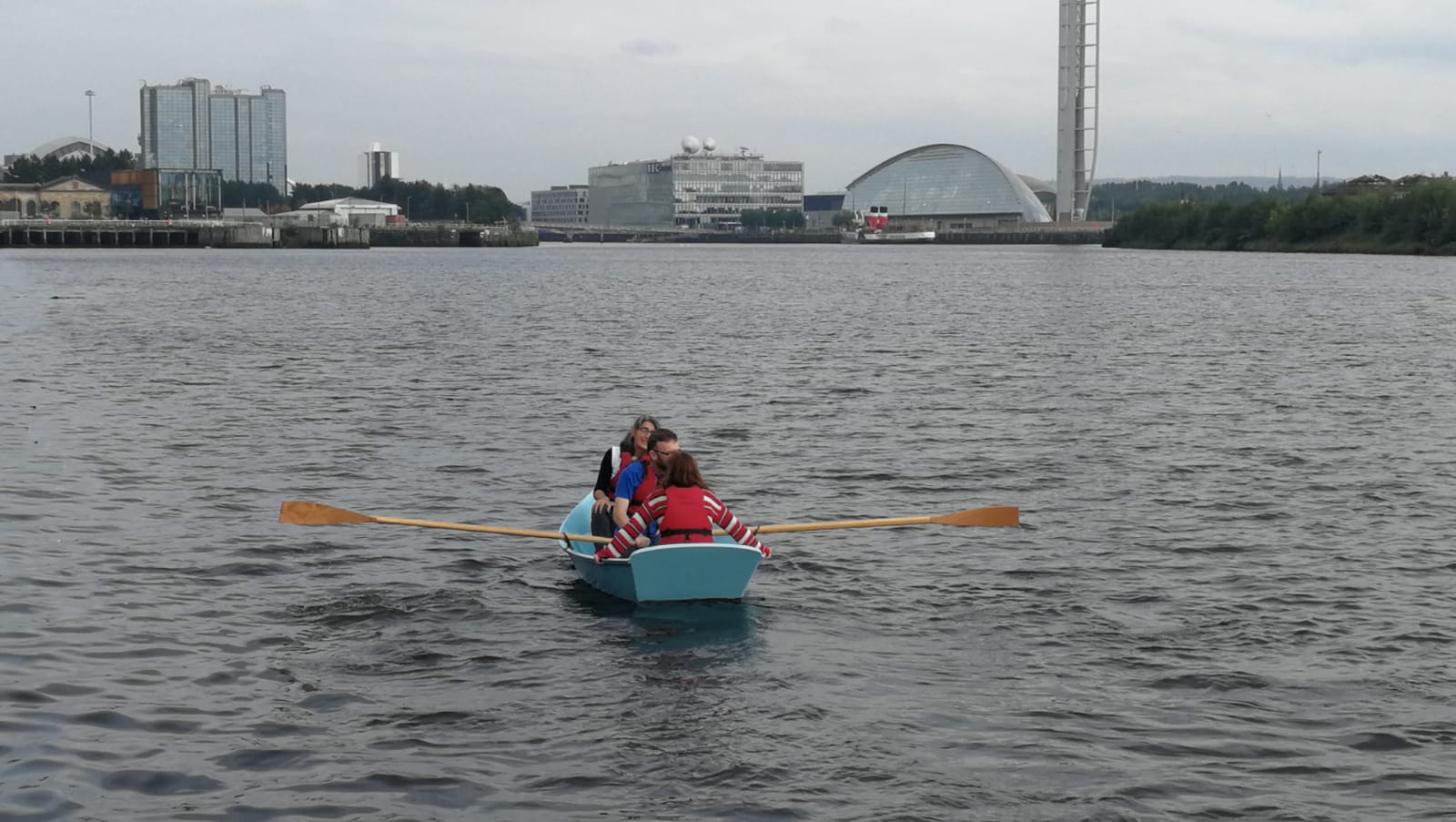
Photograph: Above: Clydebuilt Festival, September 2019, Small Boat Regatta. The participants who built the boats took them on the river Clyde and invited others to go with them to become familiar with the river. In this photo's background, we can see part of the regenerated landscape of the post-industrial river. Most of the regeneration is beyond the locality's control. Taking the boat on the water and letting others experience the river reclaims public space in the city. Credit: Author's own
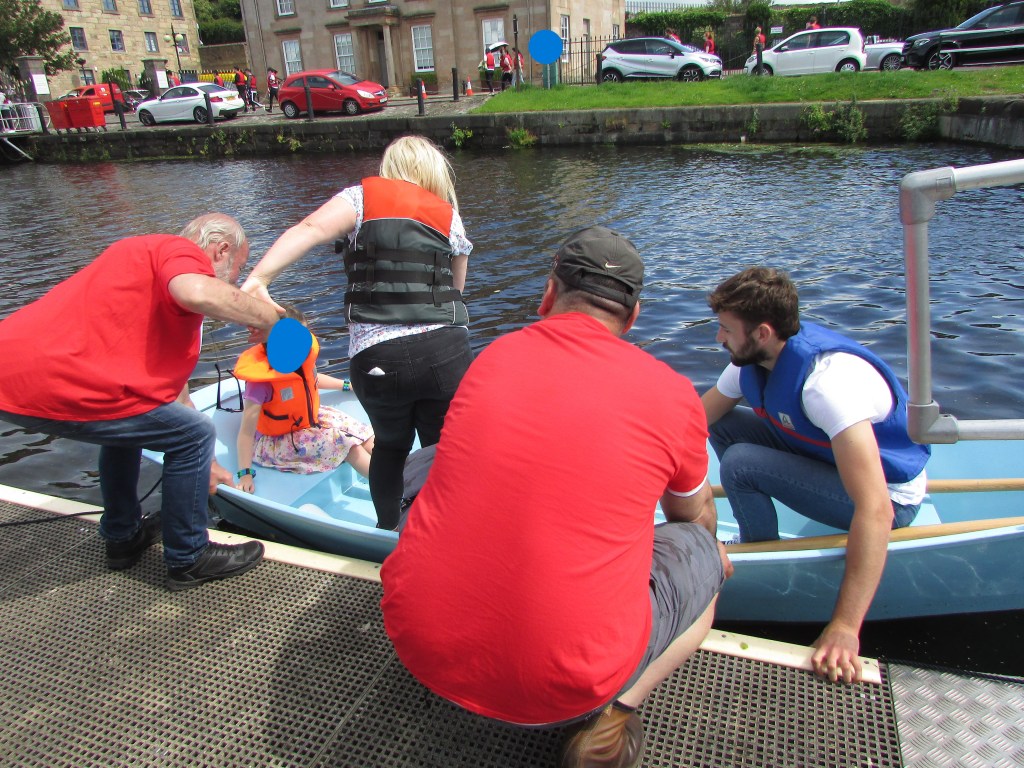
Below: Glasgow Canal festival.  Credit: Author's own
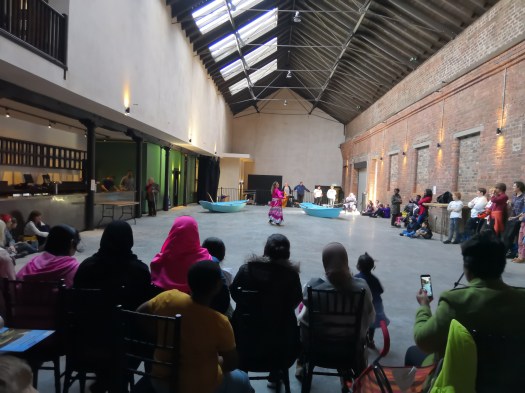
Photograph: Celebratory Event 1, The Engine Works, Maryhill.
Celebrating boat-building and boat-handling activities.
Credit: Author's own.
A celebratory event is a livescape, as it celebrates achievement in the locality (activation) by uncovering the barriers in doing so. When the event happens in a historic building (the Engine Works is a redeveloped old factory), the local heritage landscape becomes alive, and communities claim back space by becoming visible.
The Workshop
During the research, the workshop became a livescape within the heritage landscape of the waterways. Tools, craft, the participants, the boat-builders, the canal, the river, the water outside the workshops, all interacted with each other revealing the conditions where engagement with heritage takes place.

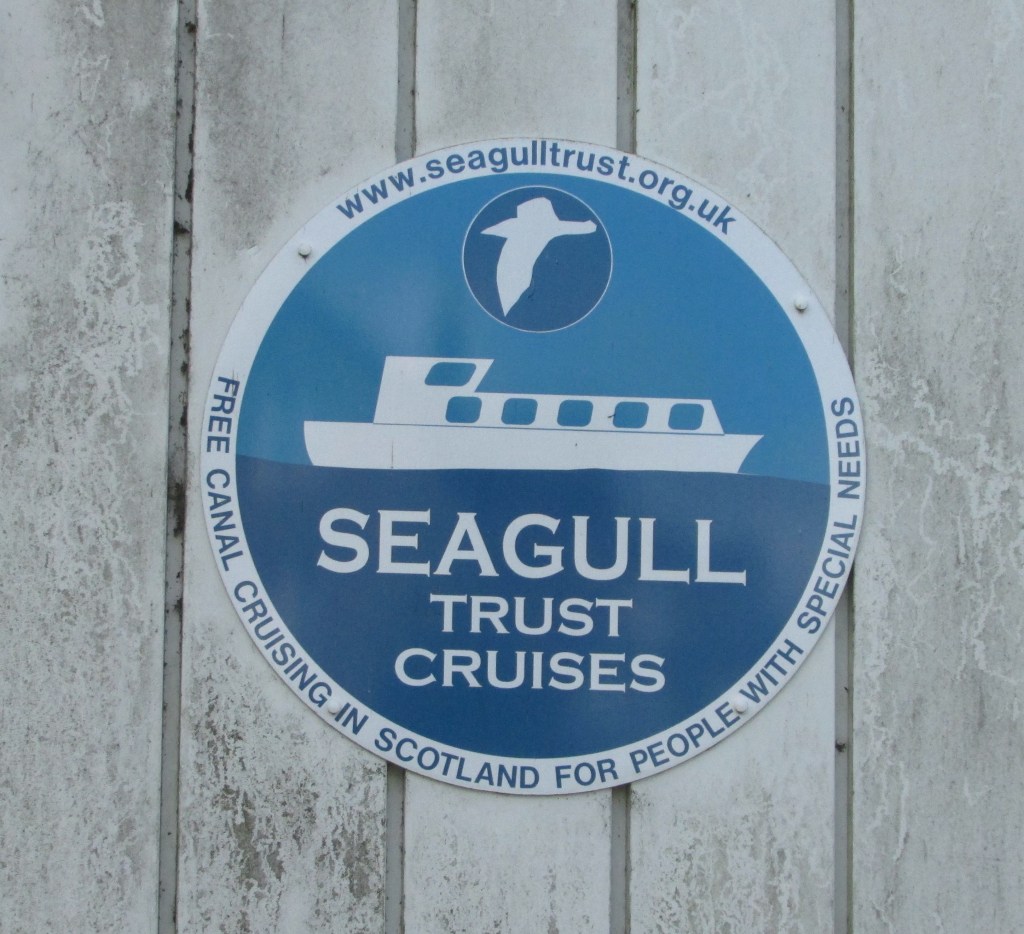

Photographs: The Seagull Trust's boathouse in Kirkintilloch. Credit: Author's own.
Human and non-human elements in a workshop have the same potential to bring the landscape alive. Building a boat needs a space, tools and craft knowledge, and all of these elements comprise the livescape.
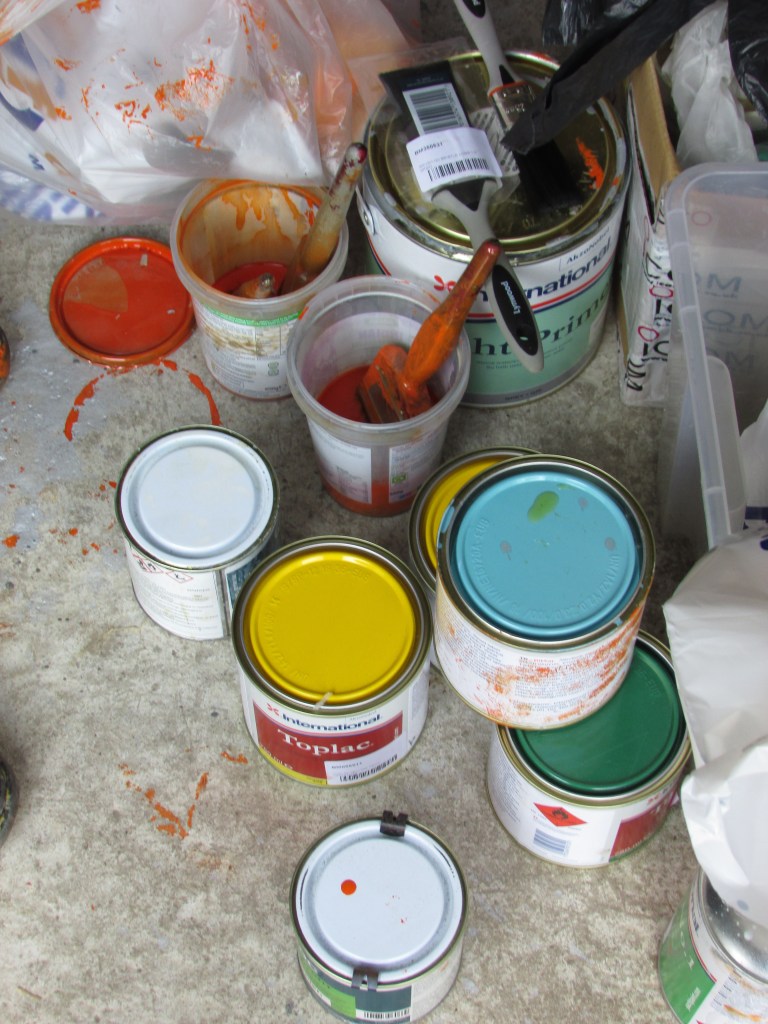
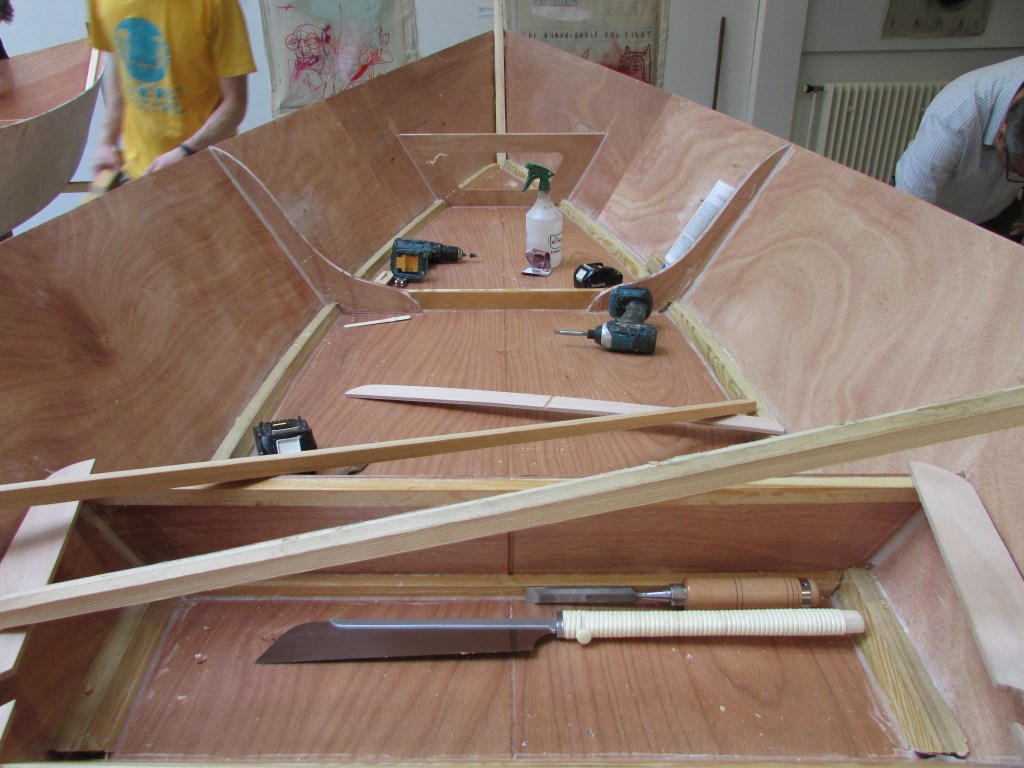
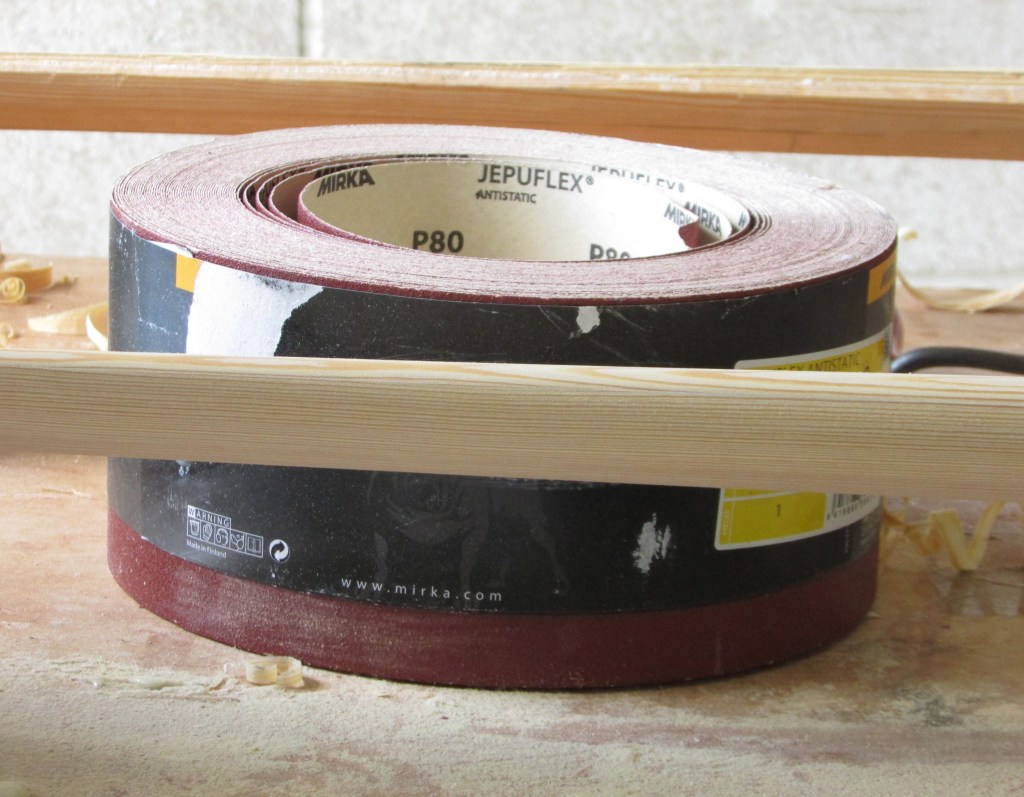
Photographs: Tools from the two boat-building workshops. credit: Author's own.
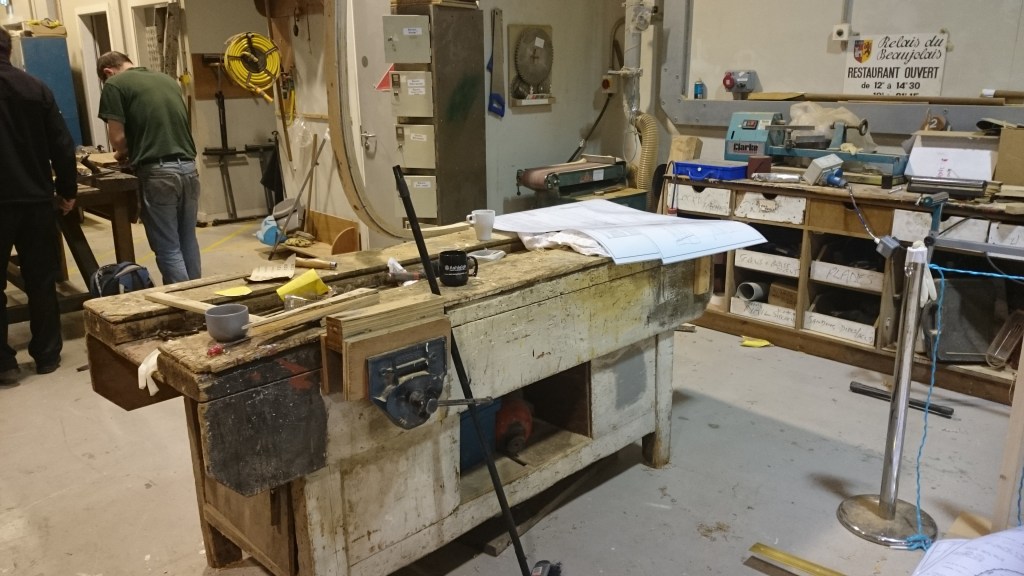
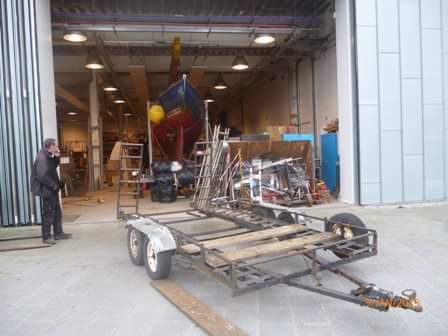
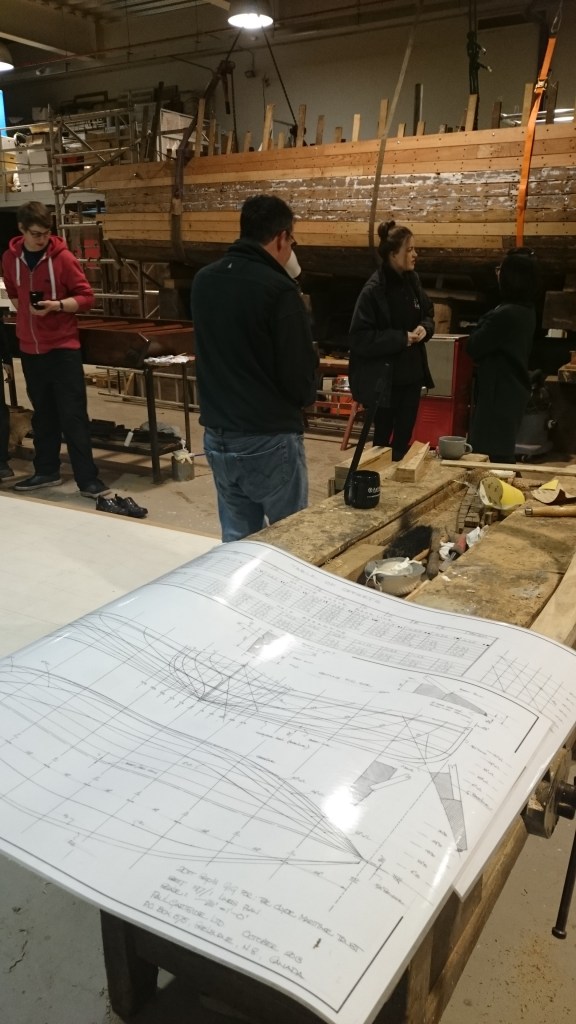
Photographs: The Clyde Maritime Trust's boat-building workshop, Riverside, Glasgow. Credit: Author's own.
The research suggests that the boat-building workshop is a livescape, as it reveals the barriers in communities’ efforts to build boats in their locality. One of the boat-building activities took place at the foyer of Kelvin College, West End, during Spring break . Despite efforts to find a suitable building to host the workshop near the Forth and Clyde canal in Maryhill (the place where most of the participants live and work), the college campus was the only option as it was the only available space the group could find in Maryhill. This was despite the fact that there are many vacant buildings, ex-industrial spaces in the area, and this showed the difficulties community groups face when they need space for activities that demand workshop availability. The activity shows how the livescape comes alive (becomes activated) through participation in the workshop.
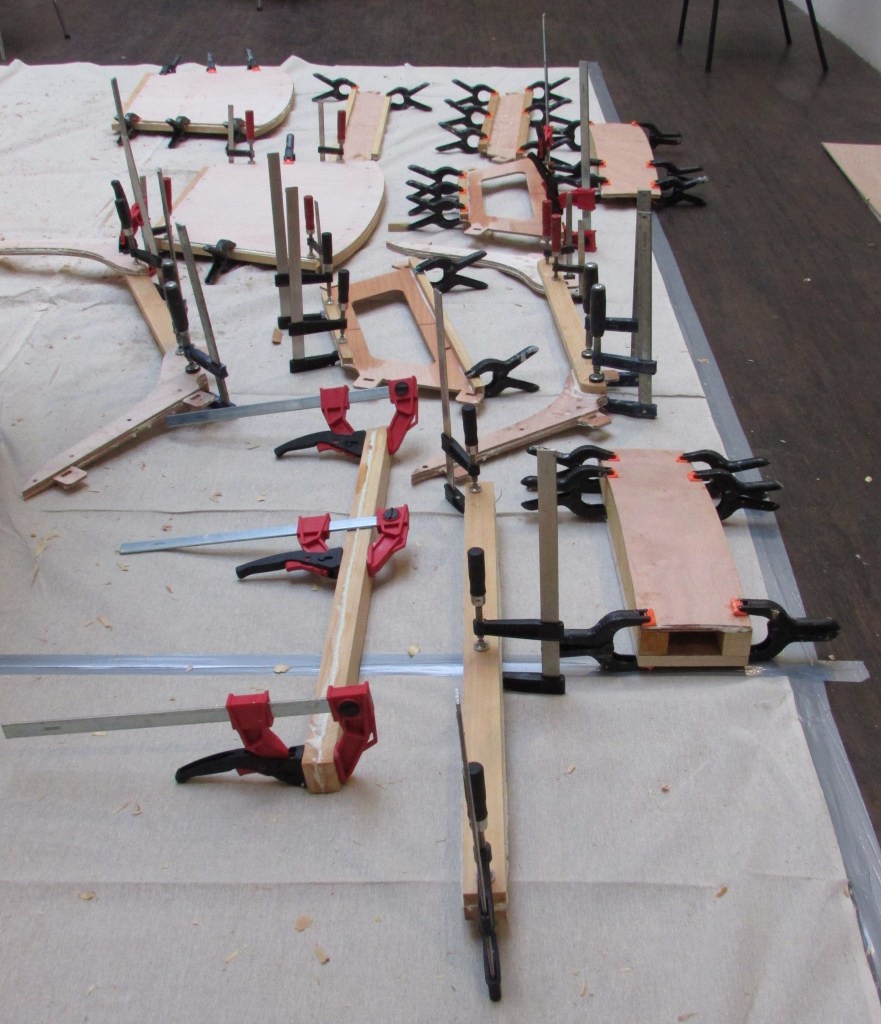
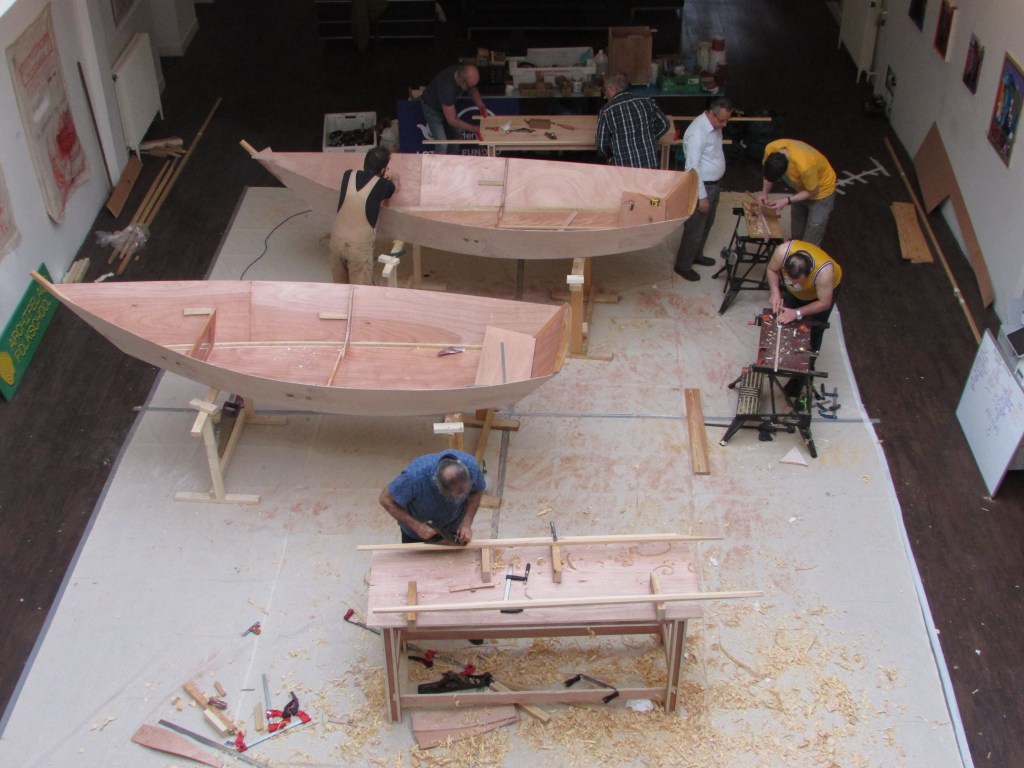
Photographs: Boat-building in the foyer of Kelvin College, West End Campus. Credit: Author's own.
The waterway
Waterways such as canals and rivers are livescapes. They are places where many elements are in interaction with each other. When the waterway becomes alive by navigating it with boats, the livescape appears to uncover the inequalities and injustices in the space that stop such activities. For example, when maintenance of the canal bridges fails due to funding shortages, and bridges can’t open for the boats to come through, and navigation is disrupted. The model of the livescape shows that knowledge comes with familiarity of a place and its elements. However, in the heritage locality, dominant knowledge (local authorities, the government, cultural institutions) and the structures that have decision making powers control what happens in the place. Boaters who are on the water regularly have knowledge of the importance of the different elements that make the canal navigable, without usually having the power to make decisions about keeping the canal navigable. Through the livescape, the canal becomes alive when boats come through it, and all the elements that constitute the canal are active and interact with each other. The interactions (such as the FCCS’s on-going campaign) reveal the tensions that exist in the landscape, such as the barriers to free navigation and the powers that operate in the locality.
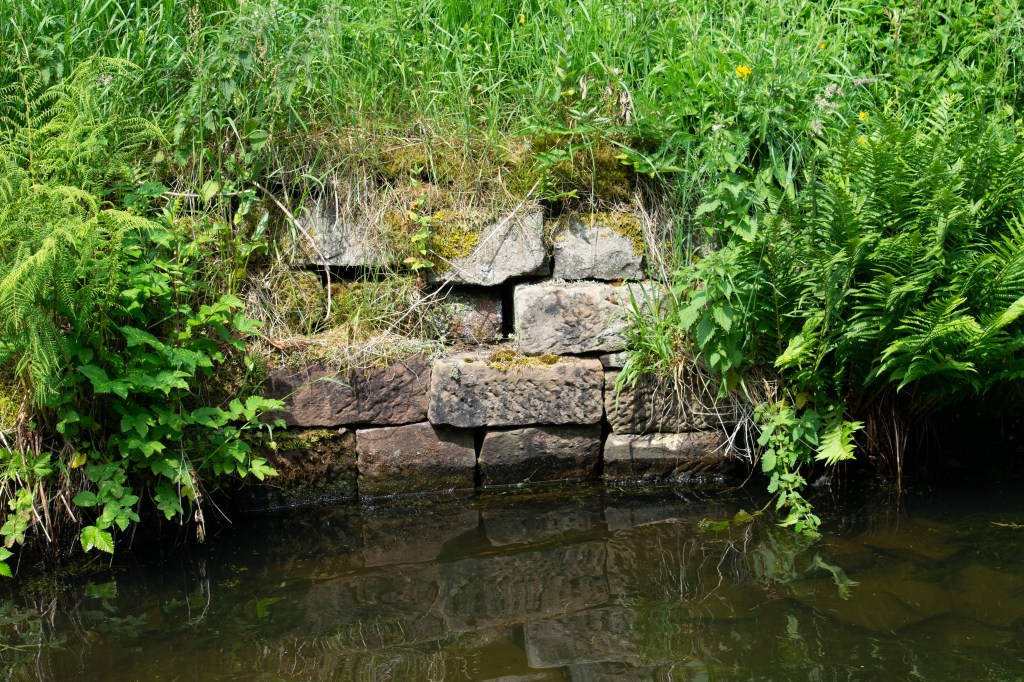
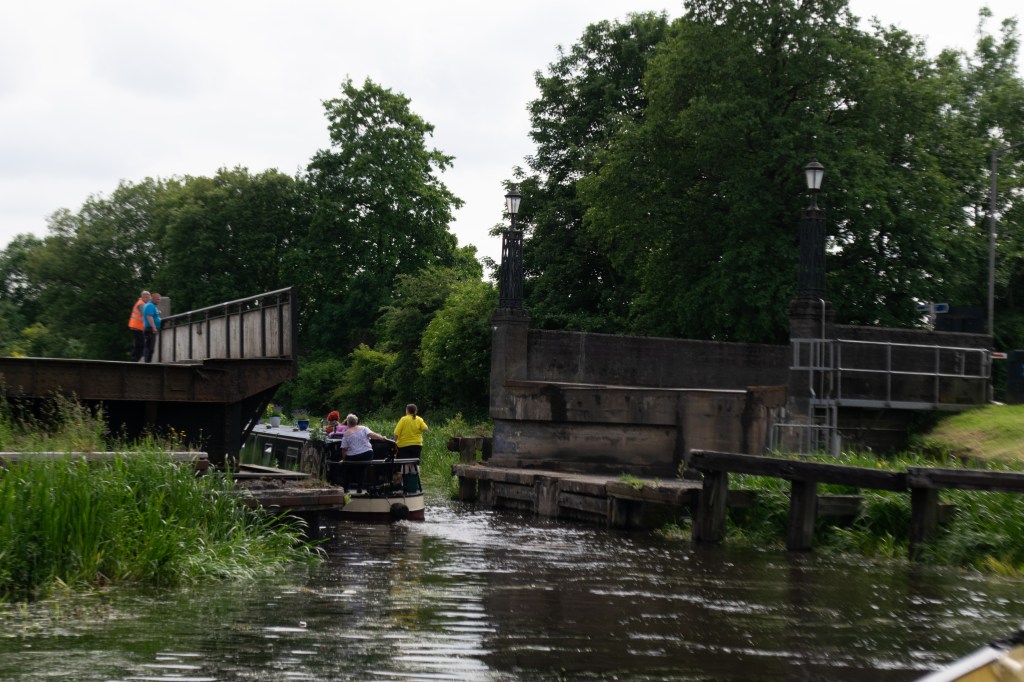
Photographs: Features of the FCC (bridges, walls, vegetation). Credit: Author's own.
Paddling or rowing a vessel on a river such as the Clyde is a challenge. City planners, local authorities, the government , and architects who design urban spaces point out the dangers of being on water and they try to ‘protect’ localities from it. When one takes a vessel to the water, it brings the landscape alive, by exposing that knowledge and sense of ownership of where one lives is gained through practice ,and that in cities only certain knowledge has decision-making power.
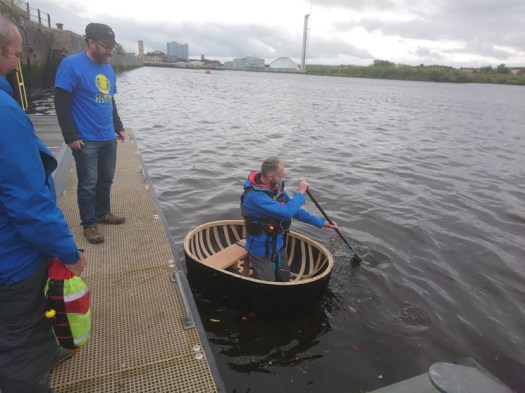
Photograph: Clydebuilt Festival 2019. Paddling a coracle made during the festival on the river Clyde. Credit: Author's own.
 Livescape